

In the final hours of the 2026 tax season, National Taxpayers Union President Pete Sepp urged the House Oversight Committee DOGE Subcommittee to take action on legislation to improve IRS operations and simplify the tax code on behalf of taxpayers.
The bipartisan Taxpayer Assistance and Service Act (TAS Act), introduced in February by Senator Mike Crapo (R-ID) and Senator Ron Wyden (D-OR) includes comprehensive reforms that would improve the taxpayer experience by requiring the IRS to upgrade technology, provide better customer service, enhance dispute resolution procedures, and protect taxpayer rights. The bill includes 23 proposals recommended by NTU in recent years.
“Support from subcommittee Members for the Taxpayer Assistance and Service could not be timelier, given the dwindling number of days in this session,” Sepp noted in his remarks to a roundtable called by the DOGE Subcommittee leadership. “This bipartisan legislation would fix many modernization issues at the IRS.”
The complexity of the nation’s tax system now costs 6.93 billion hours and more than $477 billion every filing season, with most of the burden falling on business filings. 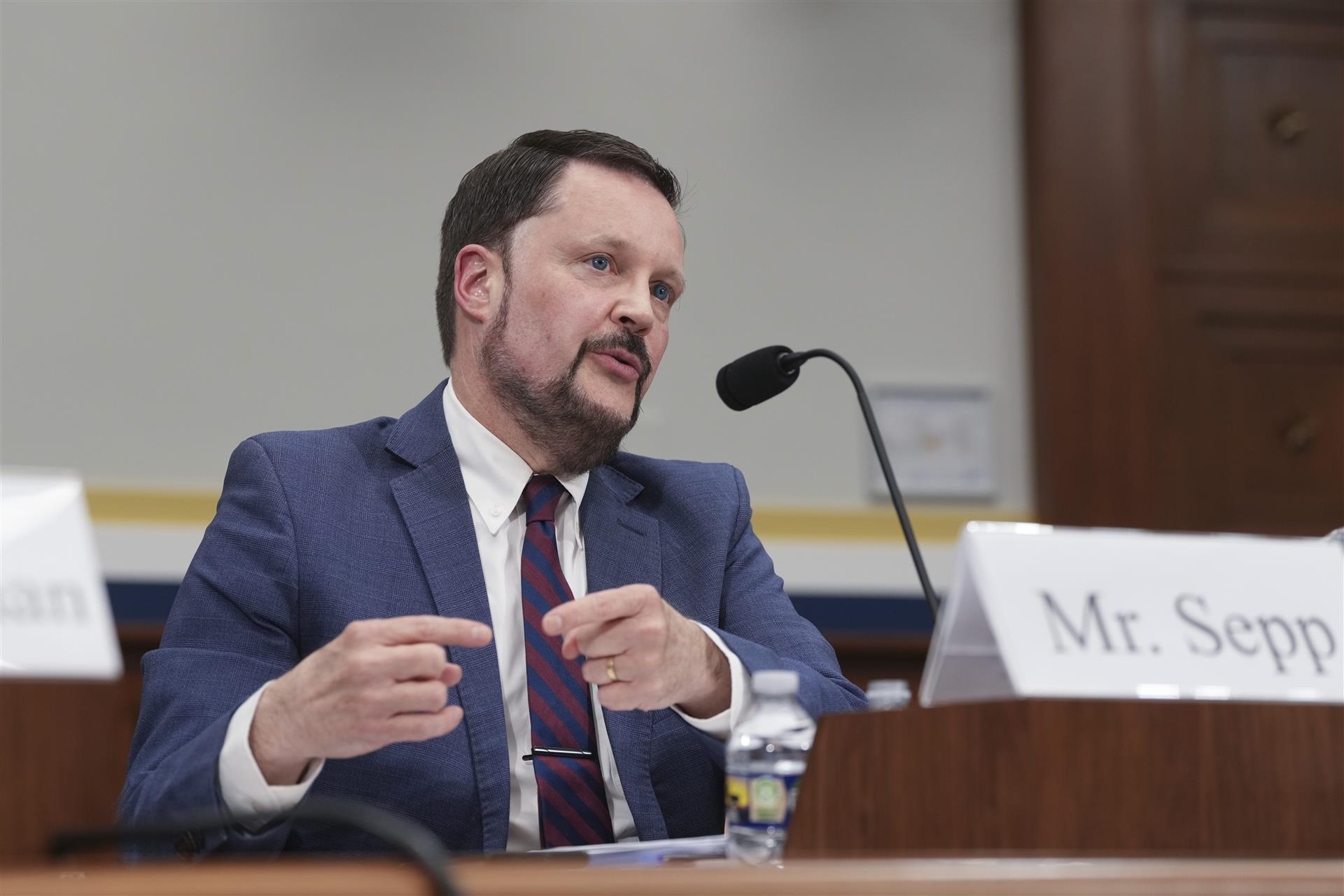
National Taxpayers Union Pete Sepp on Tax Day urged the House Oversight Committee’s DOGE Subcommittee to take action on legislation to improve IRS operations.
Sepp recommended having volunteer tax practitioners review the tax code every four years and make recommendations to remove unnecessary, outdated, and conflicting parts of the tax code, which would be sent to Congress for an up-or-down vote. This process would resemble the Base Realignment and Closure program, which has successfully reduced excess military infrastructure to save taxpayer money.
The TAS Act includes a provision recommended by NTU to require the IRS to report on sources of complexity in the tax code, which serve as the precursor to many taxpayer service problems that the bill seeks to address.
The IRS has made modest improvements to taxpayer service, technology modernization, and the tax gap, conditional on forthcoming information about the now finished filing season, according to a new annual report from National Taxpayers Union Foundation, the research arm of NTU.
However, Sepp pointed to confusing and frustrating situations that continue for taxpayers.
“If you wait until April 15 to file and you owe money you’re probably in noncompliance and will get a penalty because the system for accepting the filing and payment requires you to submit earlier” for the Treasury’s electronic payment apparatus to recognize the payment as timely filed, Sepp observed. “You’re better off throwing a check in the mail if you file on tax day.”
Sepp also told the Committee about an ongoing problem with returns by married couples filing jointly. If money is owed to the IRS, only the taxpayer listed first on a 1040 form can make the tax payment. If the person listed second on the return makes the payment, the IRS will accept it, but not apply it to the balance due, and begin assessing penalties for nonpayment.
“Congress can clarify these things instantly. All we have to do is move the bills through the process to help the IRS become a 21st century tax administrator,” Sepp said.
Frontline IRS staff should have a voice in improvements to processes and customer service. Funding should be directed toward improving guidance and customer service, rather than enforcement, according to Sepp’s remarks to the Committee.
He also recommended resurrecting the IRS Oversight Board, which has been dormant for over a decade due largely to disputes over nominees to serve on the body.
“This board is designed to give strategic guidance to the IRS while modernizing, and no one else can do that as effectively,” Sepp said, noting that other IRS watchdogs like the Government Accountability Office and the Taxpayer Advocate have different missions and focus compared to the Oversight Board. “It could make a massive difference for the success of IRS transformation,” Sepp said.
Congress Must Pass the Taxpayer Assistance and Service Act
Technological modernization is essential to the success of nearly every function at the IRS, but recent efforts to drive meaningful transformation like in the Inflation Reduction Act of 2022 have fallen far short of expectations, including an emphasis on enforcement and auditing instead of voluntary compliance, according to Sepp’s remarks to the Committee.
The Taxpayer Assistance and Service Act takes a different approach by prescribing specific actions to be completed by a set date alongside various transparency measures.
“Despite recent reform efforts, the IRS continues to lag behind in commonsense upgrades, and, in some cases, has failed to uphold core taxpayer protections established decades ago. Reforming our system for tax administration is fundamental to rebuilding trust and restoring fairness,” said Debbie Jennings, the Senior Policy Manager for National Taxpayers Union Foundation.
Jennings recently completed an analysis of the Taxpayer Assistance and Service Act, in addition to updating the annual “report card” on IRS transformation mentioned earlier.
The bill also creates a mandate for the IRS to develop a dashboard with real-time information about call wait times, the availability of callbacks, and call volume. Providing this information directly to taxpayers would help them plan when and how to contact the IRS.
Taxpayers’ right to appeal IRS decisions in an independent forum is a fundamental protection to guarantee the fair administration of tax law. The TAS Act makes several changes to the appeals process and includes judicial reforms that would close the gap between Tax Court procedure and that of other federal courts. The bill also reinforces the requirement that IRS agents obtain the signature of their supervisor prior to assessing penalties, reviving an accountability measure that the IRS has sidestepped in recent years.
“This bill is the result of commendable bipartisan efforts to build upon prior monumental reforms and avoid the mistakes of recent missed opportunities for transformational change,” Jennings said.