

National Taxpayers Union on Tuesday urged Congress to vote “NO” on the House budget resolution that contains reconciliation instructions, because it does not contain spending offsets and could saddle American taxpayers with more than a hundred billion dollars in new debt and borrowing costs.
When this Congress came into office January 3, 2025—total public debt stood at $36.2 trillion. It has since grown to $39.4 trillion and counting.
“This Congress already has the muscle memory for spending restraint after eliminating $1 trillion in unproductive spending across the federal government in the Working Families Tax Cuts last summer. Now it’s time to cut again to face the fiscal crisis head on,” Vice President of Federal Affairs Tommy Aiello said.
Congress has at its disposal no shortage of options for cutting spending and improving program integrity. According to the Government Accountability Office, the federal government loses between $233 billion and $521 billion annually to waste, fraud, and abuse.
“This Congress has already commendably passed dozens of bills to crack down on the abuse of taxpayer dollars, providing a clear baseline for offsets in this reconciliation bill. The majority must seize every opportunity, especially this one, to fundamentally reform Washington’s broken budgeting habits—a change the American people are desperately demanding,” Aiello said.
The text of the bill as written could add as much as $135 billion to the national debt without any spending offsets.
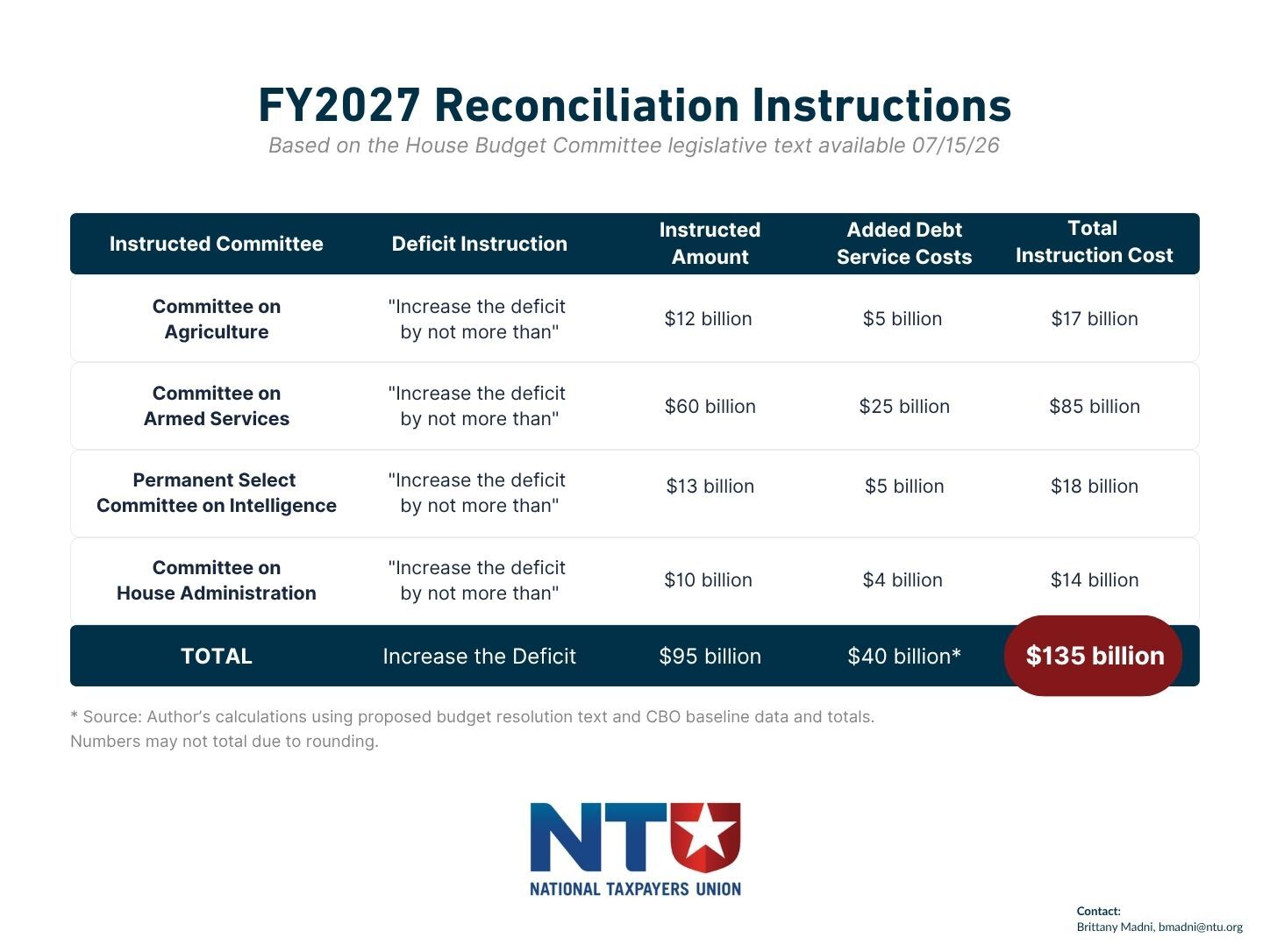
Absent significant changes, roll call votes on the resolution will be included in NTU’s annual rating of Congress and a “NO” vote will be considered the pro-taxpayer position.
NTU urges members to add real spending offsets to any reconciliation bill.
National Taxpayers Union is the only free-market organization for taxpayers that unites effective advocacy with useful research about how to limit taxes, spending, and regulation at every level and branch of government—state, federal, administrative, and judicial.