

National Taxpayers Union (NTU) on Tuesday announced the launch of a six-figure ad campaign urging representatives to retain congressional tariff authority by voting against the Lindsey O. Graham Sanctioning Russia and Iran Act of 2026 unless the bill’s tariff authority is removed.
The campaign will reach audiences through targeted digital advertising, highlighting how new tariffs would harm Americans by delegating additional congressional tariff authority to the executive branch, potentially increasing prices and benefiting adversaries like China.
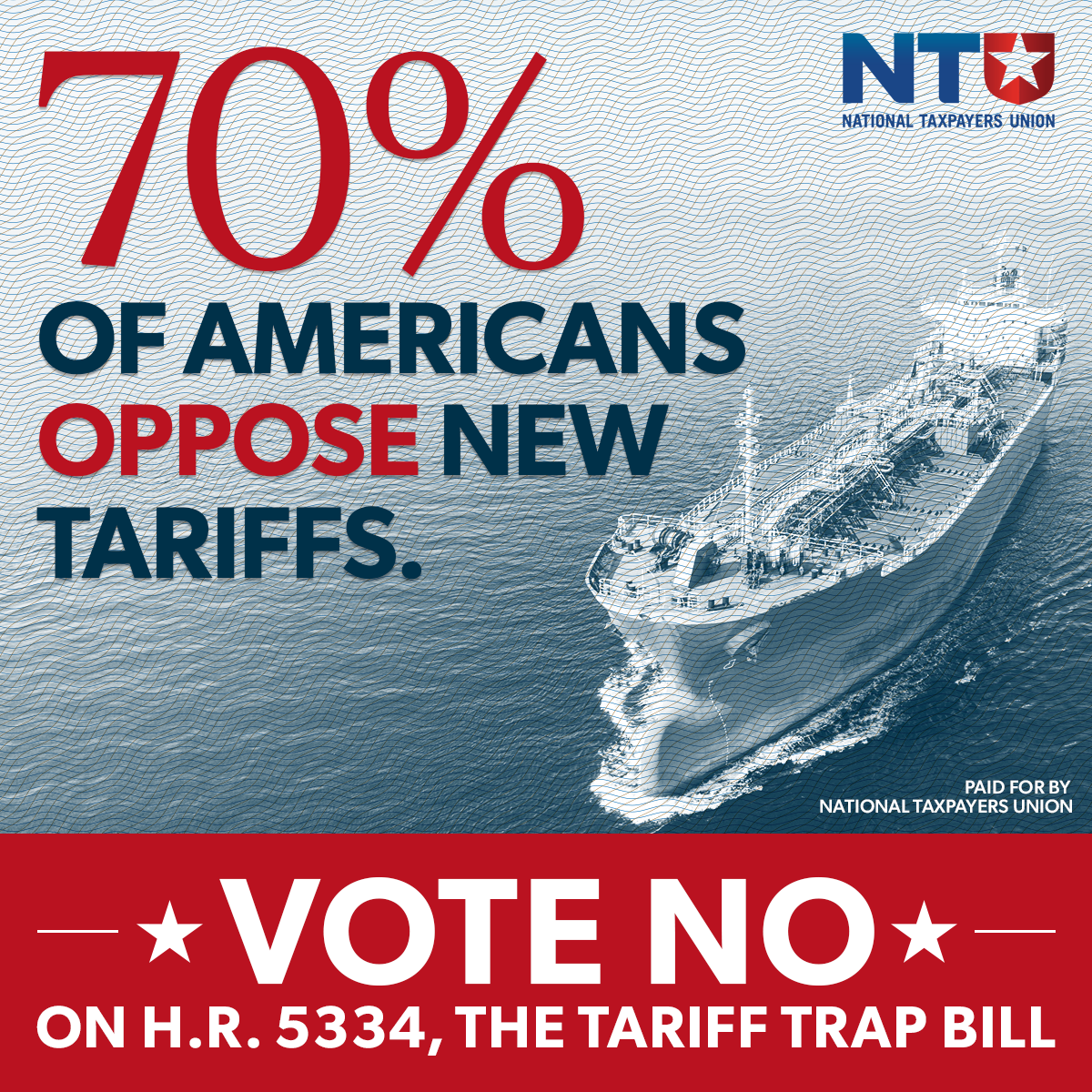
The six-figure ad buy urges Congress to vote no unless the bill’s tariff authority is removed.
“Congress must reclaim its tariff authority, not give more of it away. This bill authorizes wide latitude to the executive branch to increase import taxes on Americans, under the guise of sanctioning Russia,” Free Trade Initiative Director Bryan Riley said. “There are more effective ways to punish Putin that don’t involve the potential to increase costs on Americans and make their life more expensive. We strongly urge the House to either remove the tariff authority from the bill or reject it.”
NTU is focused solely on one problematic portion of the bill: the ambiguity contained in section 113, which would give the president new discretion to impose tariffs of up to 100% on countries that are among Russia’s top five export markets for crude oil or natural gas or among the top five countries facilitating Russian oil sanctions evasion.
The current Administration has shown a willingness to maximize tariff actions, including:
- Imposing “Liberation Day” tariffs under the International Emergency Economic Powers Act. The U.S. Supreme Court struck down this move earlier this year.
- Imposing temporary “balance of payments” tariffs under Section 122 of the Trade Act of 1974 that also face a legal challenge from U.S. small businesses.
- Imposing $89 billion a year in import taxes via Section 301 of the Trade Act of 1974, many of which hit goods from U.S. allies that have criticized Russia’s invasion of Ukraine like Japan, South Korea, Australia, and the European Union. These tariffs are also subject to a lawsuit.
- Imposing 50% tariffs on selected Canadian goods via Section 338 of the Tariff Act of 1930—the Smoot-Hawley Tariff Act—a provision that has never before been used.
- Imposing “national security” tariffs under Section 232 of the Trade Expansion Act of 1962 on goods ranging from sofas to trombones, while threatening to impose even more tariffs on products like generic drugs.
Congress should not pass the bill without first removing the delegation of new tariff authority.
National Taxpayers Union is the only free-market organization for taxpayers that unites effective advocacy with useful research about how to limit taxes, spending, and regulation at every level and branch of government—state, federal, administrative, and judicial.