

Reminder: The Income Tax Trend Is Still Toward Tax Cuts
State tax increases have taken up a lot of the air in the room this year, with the California billionaire tax ballot measure and Washington’s adoption of a new income tax rightly drawing a great deal of attention. But that doesn’t mean the ongoing trend of state tax cuts in the rest of the country has slowed down.
After a special fiscal session called by Governor Sarah Huckabee Sanders, Arkansas recently became the fifth state this year to cut its income tax, dropping the top rate from 3.9% to 3.7%. In doing so, Arkansas joined state legislatures in Georgia, South Carolina, Utah, and West Virginia in passing new income tax cuts this year, all of which are effective January 1, 2026.
Additionally, eight other states either passed tax cuts last year or had trigger-based cuts take effect at the beginning of the year.
New State Income Tax Cuts Going into Effect in 2026
State | Previous Top Rate | New Top Rate |
Arkansas | 3.9% | 3.7% |
Georgia | 5.19%* (flat) | 4.99% (flat) |
Indiana | 3% (flat) | 2.95% (flat) |
Kentucky | 4% (flat) | 3.5% (flat) |
Mississippi | 4.4% (flat) | 4.0% (flat) |
Montana | 5.9% | 5.65% |
Nebraska | 5.2% | 4.55% |
North Carolina | 4.25% (flat) | 3.99% (flat) |
Ohio | 3.5% | 2.75% (flat) |
Oklahoma | 4.75% | 4.5% |
South Carolina | 6% | 5.21% |
Utah | 4.5% (flat) | 4.45% (flat) |
West Virginia | 4.82% | 4.58% |
* Georgia’s income tax rate dropped from 5.19% to 5.09% on January 1 of this year as part of a scheduled reduction.
That’s not to mention Missouri, where voters will vote in August on a ballot measure that would allow the state to eliminate the income tax, in part by expanding the sales tax base to services.
A Pathway to Zero?
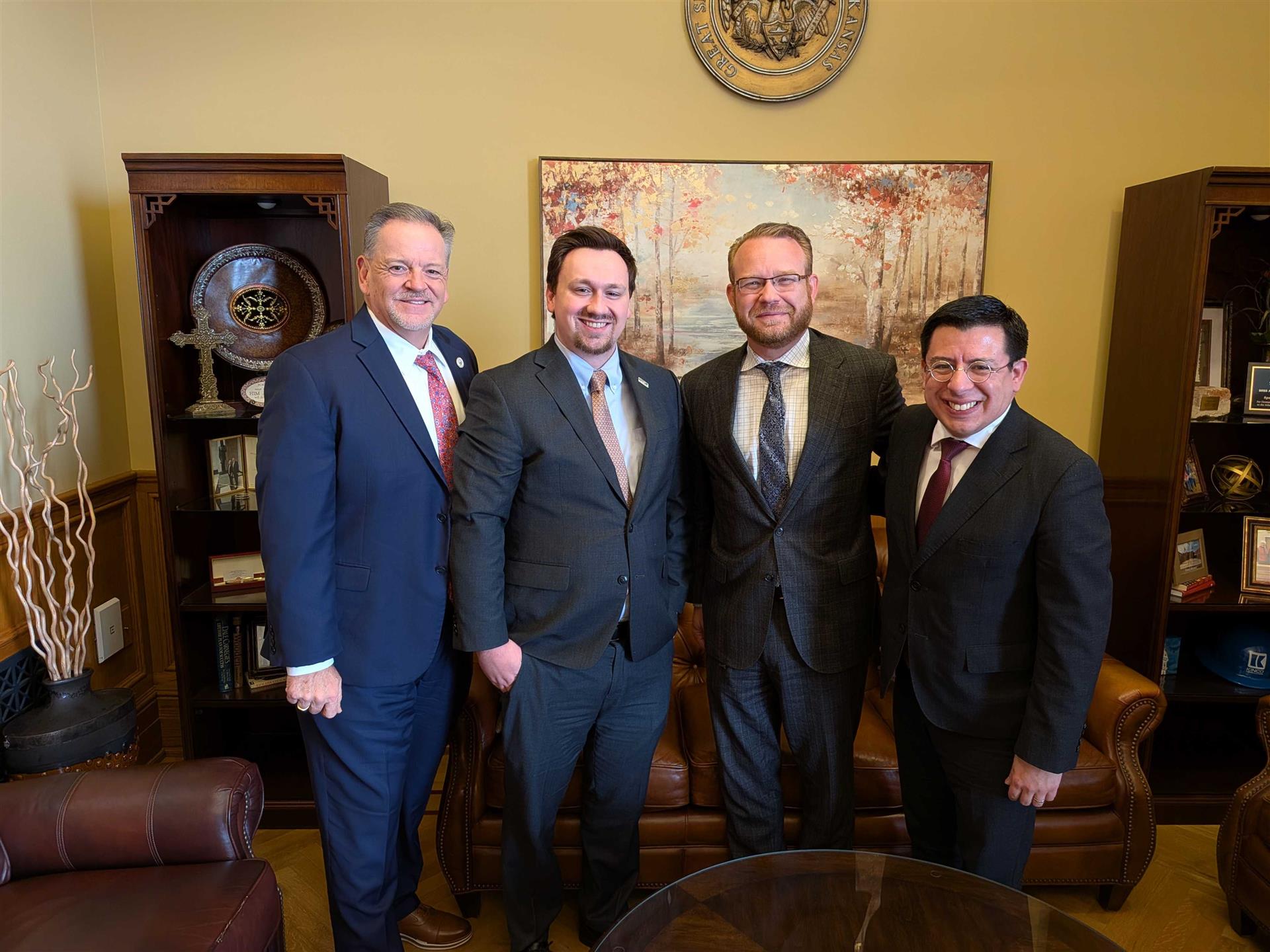
Earlier this year, NTUF and Americans for Prosperity met with Arkansas Speaker of the House Brian Evans to discuss a pathway to zero income tax. From left, Arkansas Speaker Brian Evans, NTUF Director of State Policy Andrew Wilford, AFP Arkansas Director Ryan Norris, and NTUF Executive Vice President Joe Bishop-Henchman.
Earlier this year, NTUF and Americans for Prosperity met with Arkansas Speaker of the House Brian Evans to discuss a pathway to zero income tax. From left, Arkansas Speaker Brian Evans, NTUF Director of State Policy Andrew Wilford, AFP Arkansas Director Ryan Norris, and NTUF Executive Vice President Joe Bishop-Henchman.
Five of these states have a statutory, trigger-based path to zero income tax: Kentucky, Mississippi, Oklahoma, South Carolina, and West Virginia. Arkansas missed a chance to join them.
Even though Arkansas has cut its income tax four times in the past four years, the plan to get to zero is almost as important as getting there. Taxpayers may find it hard to conceptualize how much they will save from a 0.1% or 0.2% income tax cut, but they can see exactly the difference that zero income tax would make every April. Making clear to taxpayers that the state has been set on a responsible path to accomplish that goal makes a difference.
Businesses also value the information that a defined plan gives them. After all, individual income taxes are important to businesses as well. For pass-through businesses, of course, it is the only relevant income tax. But even for C corporations, a lower income tax makes attracting talented employees easier and compensating them more affordable.
Even though triggers do not guarantee a set schedule of income tax reductions, businesses plan for the long term when they are given enough information to do so. Knowing that a state is moving in the direction of zero income tax allows them to plan for that future.
States that have been consistently cutting taxes without setting themselves on a clear pathway to zero income tax are missing an opportunity. Even if it takes time to get there, the plan matters.