

For decades, Colorado has stood out as a uniquely pro-taxpayer state. The state’s Taxpayer Bill of Rights (or TABOR), while imperfect, represents a unique effort to preclude the ballooning of the size of government and keep voters more directly involved in budgetary decisions. At the same time, the income tax has remained at a flat and reasonably competitive rate.
But that could change next week. Coloradans will be faced with two ballot measures which could together undermine both TABOR and that flat, low rate.
Initiative 195 (or Amendment 87) would replace the current flat 4.4% income tax rate with graduated brackets. Lower-income taxpayers would receive a tiny tax cut, while higher-income taxpayers would face rates as high as 8.4%.
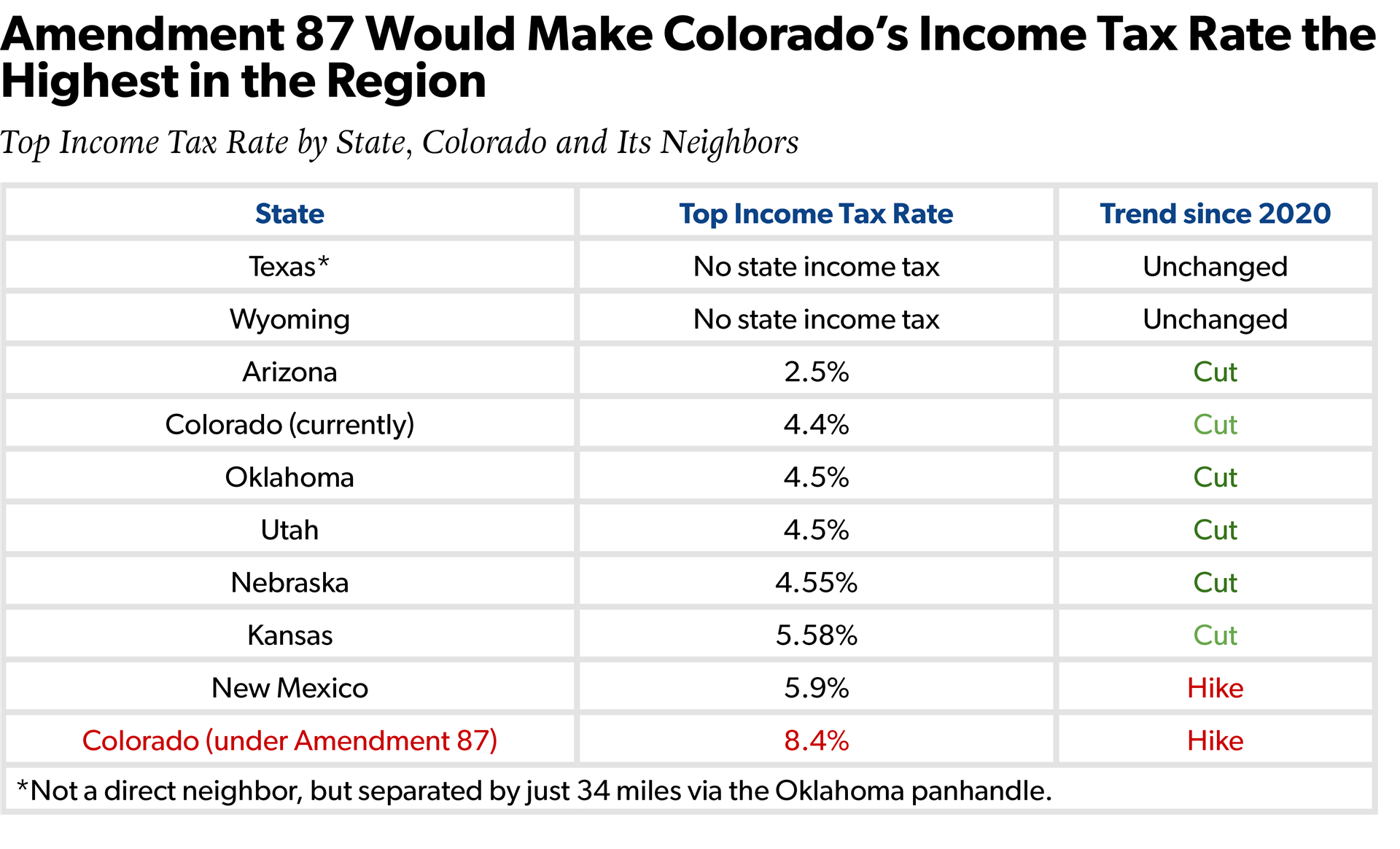
Needless to say, this would take Colorado from a competitive state on the income tax front to a Rocky Mountain albatross, with a top income tax rate significantly higher than any of its neighbors. It’s why Democratic Governor Jared Polis, who has been attending the Gavin Newsom School of Trying to Keep Your Party from Doing Dumb Things, has come out against the proposal.
But, while the state’s flat income tax is under threat, so is TABOR’s cap on government spending. Proposition NN would raise the TABOR spending caps by more than 25%, making refunds for Colorado taxpayers extremely unlikely for the foreseeable future.
TABOR hasn’t completely succeeded at preventing overspending in Denver. But the absence of restrictions isn’t better than imperfect restrictions. Just a couple of years ago, NTUF’s Taxpayer Defense Center succeeded in securing more than $2 million in refunds for taxpayers in Colorado’s Lower South Platte Water Conservancy District after the district violated TABOR to illegally increase local taxes.
NTUF recently published a full report on the tax and fiscal ballot measures that Coloradans are facing this fall.