


Key Facts
- Even as New York Governor Kathy Hochul begs millionaires to return from Florida, New York City Mayor Zohran Mamdani is busy coming up with new ways to tax the rich.
- Data on each state’s share of the millionaire population shows that no state is losing millionaires faster than New York, with the state’s millionaire population dropping from 12% to 8.7% between 2013 and 2022.
- Had New York’s millionaire share not dropped and instead remained steady at 2013 levels, New York would be bringing in at least $12 billion more in revenue each year.
New York City Mayor Zohran Mamdani continues to antagonize some of the city’s biggest taxpayers by floating new tax proposals, undermining Governor Kathy Hochul’s increasingly desperate pleas for “patriotic millionaires” to return from Florida and pay New York taxes again.
But, despite Governor Hochul’s belated warnings that New York’s tax base has been hollowed out, progressive groups continue to insist that millionaires will not leave if you tax them. After all, they argue, the number of millionaires continues to increase in states like New York.
In the most literal sense, this is true. New York has more millionaires as of the latest (2022) IRS data than it did a decade prior.[1] But so does the rest of the country, as economic growth and inflation push more and more Americans above the $1 million threshold.
In fact, far from debunking the idea that the wealthy leave states that overtax them, New York is an extremely illustrative case study in how forcing the high-income earners that power a state’s tax base to run for the hills ends up costing a state revenue in the long term.
The Cost of Losing Millionaires
A more relevant metric for determining New York’s ability to retain its wealthy residents is the state’s share of millionaire households. And there, New York’s millionaire exodus becomes far more apparent. In just a decade, New York’s share of the nationwide millionaire population has plummeted from 12% to just 8.7%.
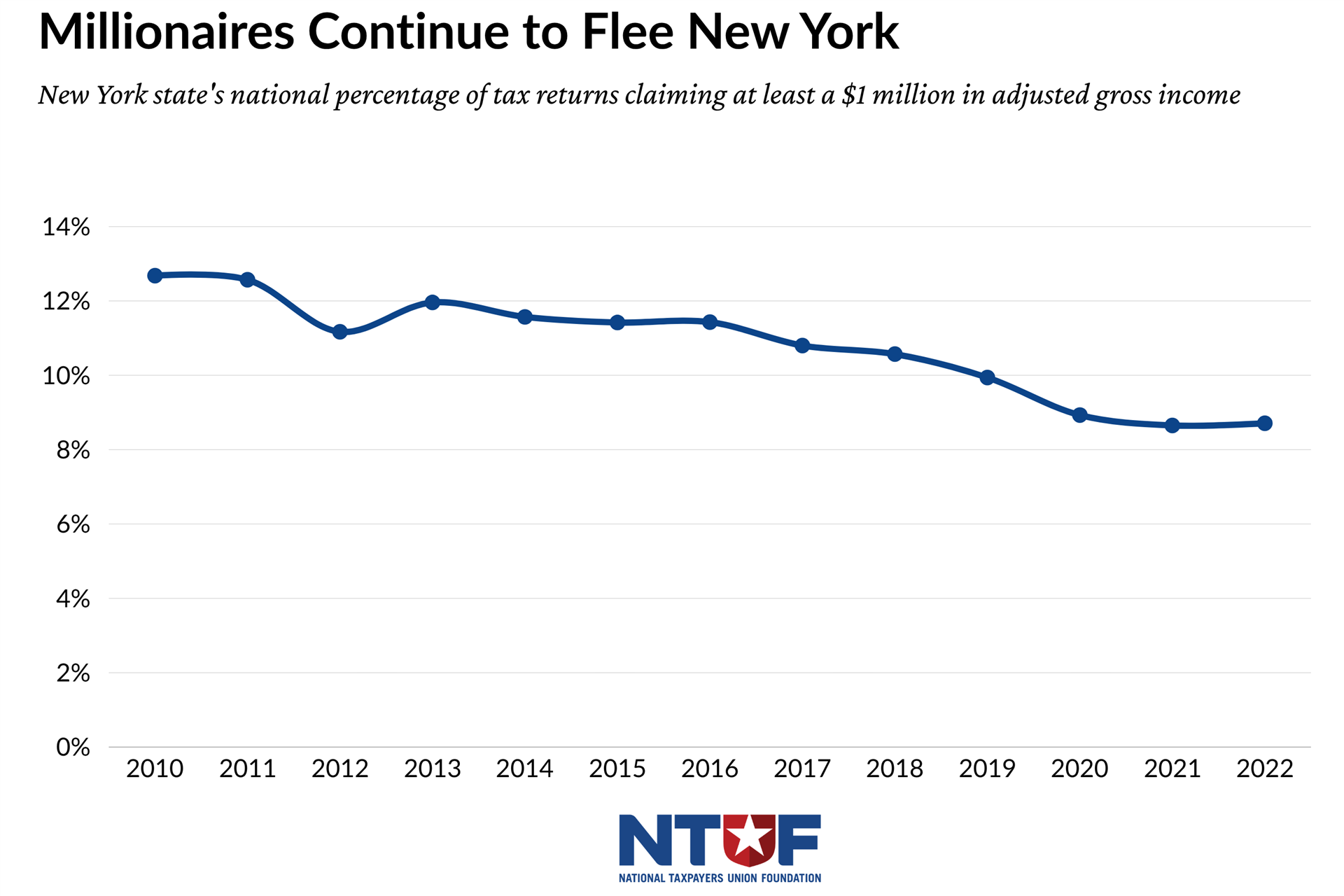
In 2013, New York had 41,520 households reporting AGI over $1 million. By 2022, the number of households reporting AGI above that level had increased to 69,780. But had New York’s share of millionaires remained steady at 12%, the state would have had 95,812 millionaires.
Based on the amount of state and local tax paid per millionaire filer, had New York’s millionaire share remained steady at 2013 levels, the Empire State would have brought in an additional $12.2 billion in revenue in 2022.[2] That is a significant driver of the state’s ongoing budgetary woes.
The implications for other New Yorkers are clear. Currently, a single millionaire in New York pays the same amount of tax as about 39 average New Yorkers. In other words, for each millionaire that leaves, 39 regular New Yorkers would have to pay double the amount of tax they currently pay just for the state to break even.
Other states have a similar lesson to learn. Washington, for example, has traditionally benefited from having no state income tax. And from 2013 to 2021, Washington’s nationwide share of millionaires increased from 2.04% to 3.31%.
In 2022, however, Washington abandoned its policy of not taxing income at the state level by implementing a new capital gains tax on high earners. That same year, Washington’s share of millionaires dropped all the way back down from 3.31% to 2.69%, and net outmigration—in a state that previously gained tens of thousands of new residents a year—shrank Washington’s tax base for the first time.
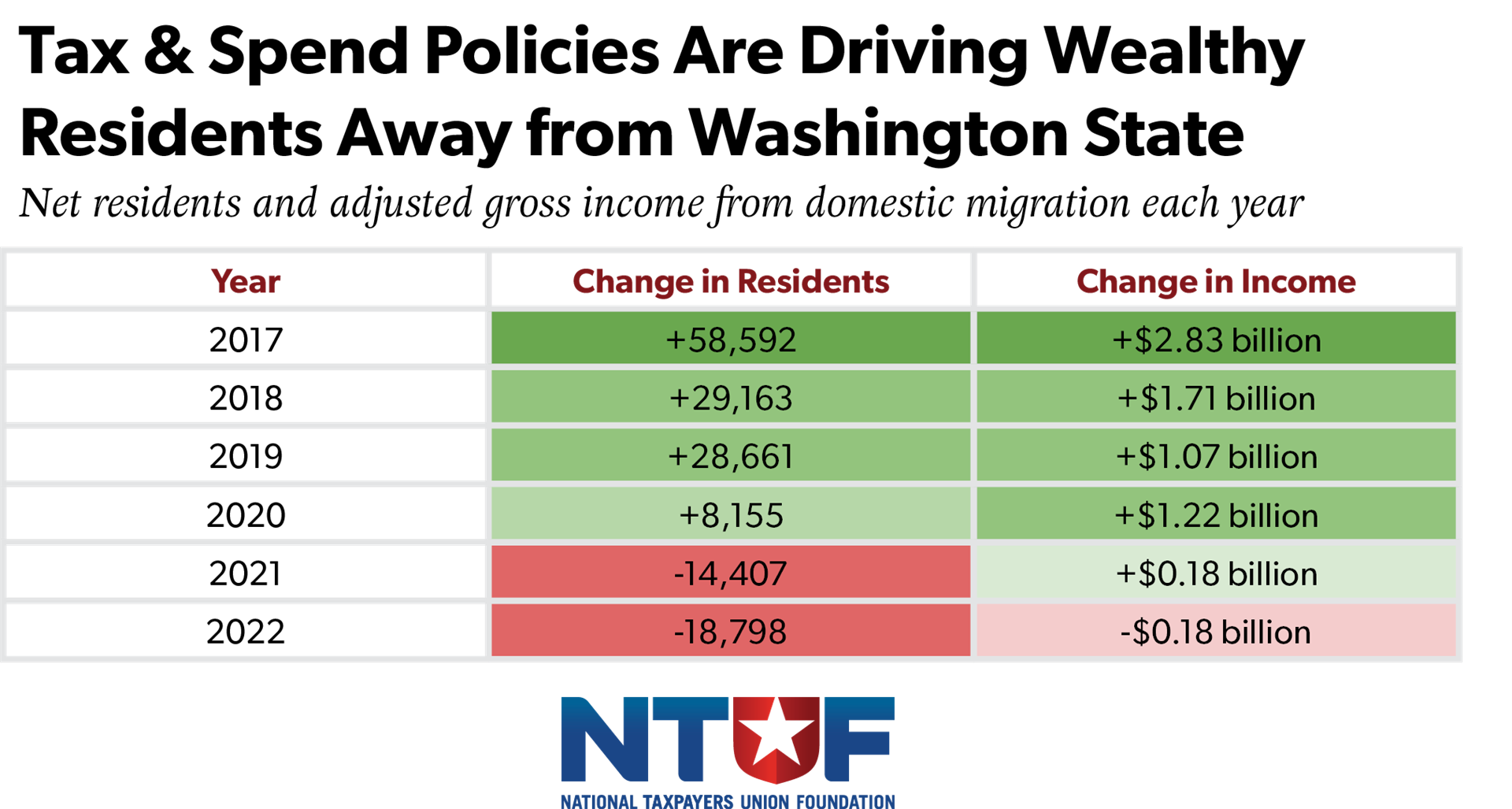
Since then, Washington has continued to target high earners for tax bills. This year, Washington passed a 9.9% income tax on millionaires, set to go into effect in 2028. As Washington continues to double down on policies that push wealthier residents elsewhere, it can expect further tax base erosion and budget shortfalls.
Conclusion
Policymakers should not be deceived by high-tax advocates pointing to increased millionaire populations to suggest that millionaires do not react to tax increases. The millionaire population is constantly increasing due to inflation, economic growth, and population increases. Case in point: not a single state had fewer millionaires in 2022 than in 2013, and the overall number of American millionaires more than doubled during that time period.
Looking at variations in the share of millionaires tells us much more about which states are attracting and creating millionaires and which are losing them. And in New York in particular, it is an exodus so clear and rapid that it is a wonder that Governor Hochul isn’t doing more than just begging to bring them back.
States standing at a crossroads need to recognize that tax policy is about more than just balancing an accounting book. It is also about enabling growth and remaining competitive enough to balance that accounting book in the future as well.
[1] “Millionaire” in the context of this report refers to million-dollar earners, as reported to the IRS. Reliable data on “millionaires” as measured by net worth does not exist.
[2] Estimate is based on average reported state and local taxes paid by remaining millionaire filers. Around a quarter of millionaire filers in New York reportedly claimed the standard deduction instead of itemizing their federal returns, despite the fact that itemizing would always result in a larger deduction. We conservatively assumed that filers claiming the standard deduction paid half as much state and local tax as itemizers.